Three-Sided Bay / C-Type

Panoramic flame viewing across the front and both sides.

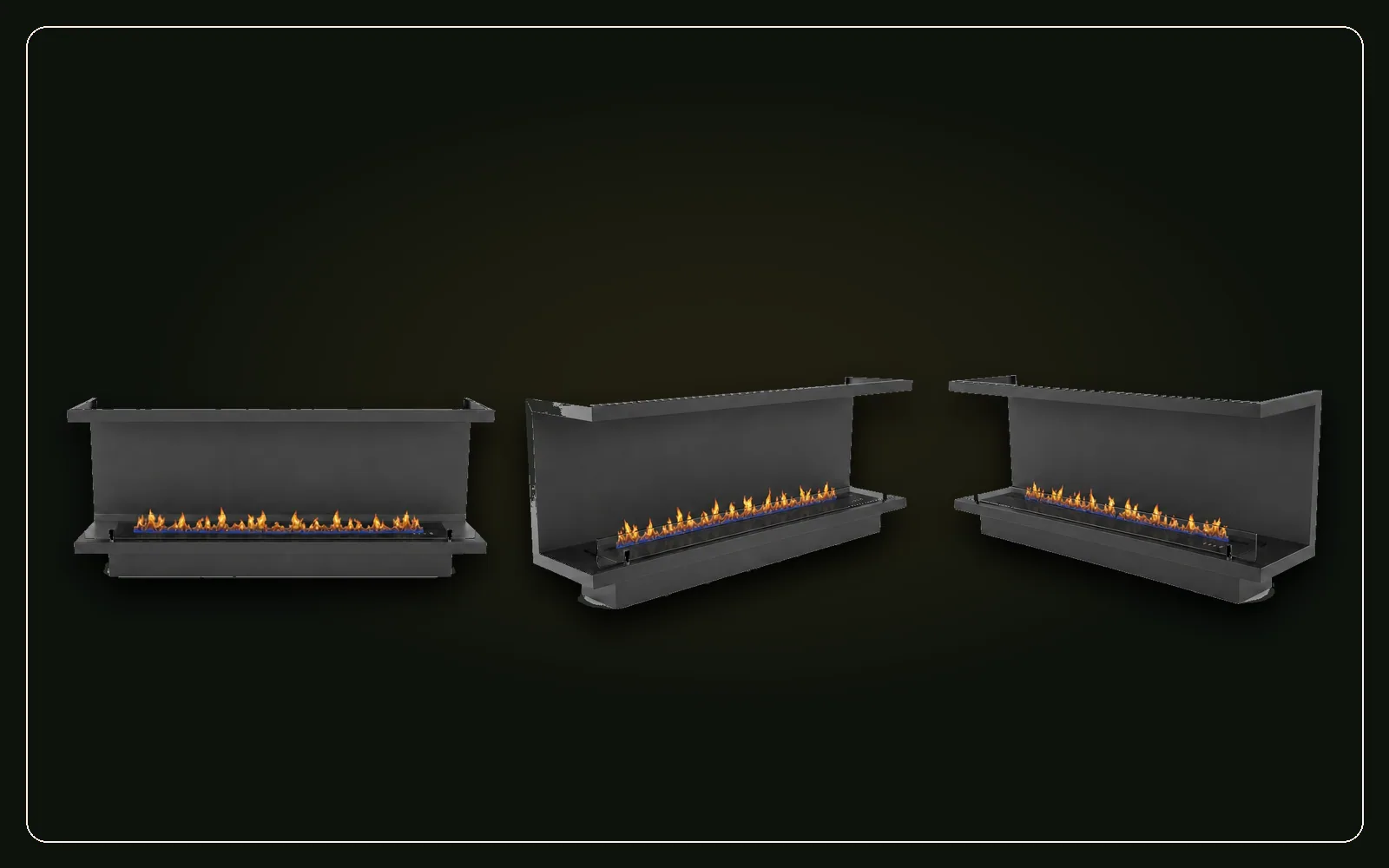
A three-sided bay firebox projects the visual effect beyond a flat wall. It is also called a bay or C-type configuration; “peninsula” may be used in some markets, but the drawing must show the three actual viewing faces.
3 facesFront plus two sides
PanoramicArchitectural projection
Custom drawingOpening and glass alignment
Three product views of SEFIRE three-sided bay and C-type fireplace fireboxes

Configuration basis: front and two-side visibility around a selected insert.

Last technical review: July 14, 2026. No standard dimensions or universal clearances are asserted.

Configuration

Three visible faces increase fabrication and finish precision.

Side openings expose more of the internal assembly and make alignment errors easier to see. Corner joints, glass edges, burner position and finish transitions must be controlled on the approved drawing.

Critical Decisions

Projection depth

Define how far the bay extends from the wall and how it connects to surrounding structure.

Opening continuity

Coordinate front and side opening heights, reveals and glass lines as one geometry.

Insert position

Center the flame or mist effect so it reads correctly from all three viewing directions.

Access

Keep controls, fuel, water and service components accessible without dismantling premium finishes.

Project Brief

Provide plans, elevations and section.

  • Exact ethanol burner or vapor insert model.
  • Front and two side opening dimensions.
  • Overall width, height, depth and projection.
  • Glass/guarding and visible edge requirements.
  • Finish material, joints and service side.
  • Connections, country, quantity and packing limits.

Terminology: use “three-sided bay firebox” for clarity. “C-type” can remain as a secondary factory term, not the only description.

FAQ

Is this a corner fireplace?

It has front and both side views. A two-sided corner configuration is a different geometry.

Can it use water vapor?

Yes when the housing is designed around the exact mist insert and service requirements.

Is glass mandatory?

That depends on the appliance, project design and local requirements.

Why is alignment important?

Three open faces make inconsistent reveals, glass and burner position visible from more angles.