Outdoor Real-Flame Projects
Outdoor ethanol fireplace buyer's guide: qualify the site before the product
Outdoor ethanol fire features are exposed combustion systems, not indoor burners moved onto a terrace. Wind can distort flame, rain can enter housings, coastal air can attack materials, debris can block drainage, and hospitality guests can reach controls or hot surfaces. A sound specification starts with the site's hazards and operating plan, then selects a documented product configuration.
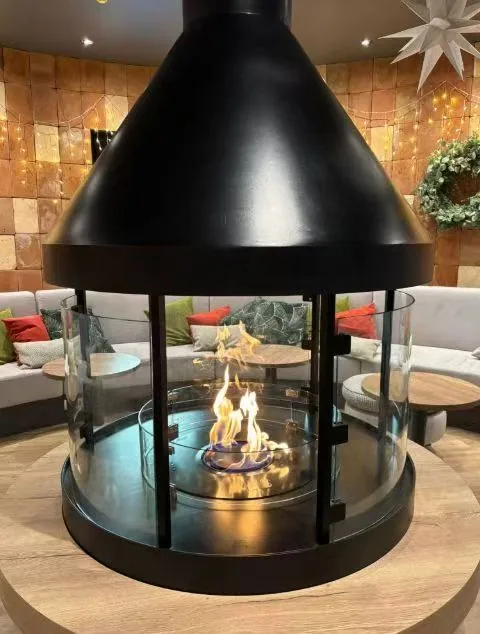
Evidence boundary: do not infer outdoor suitability from a photograph, stainless-steel description, or generic smart-fireplace page. Obtain the current drawing, manual, environmental limits, fuel requirements, and conformity evidence for the exact quoted configuration and destination.
Direct answer: an outdoor fireplace is an environment-and-operations system
The buyer must coordinate six subjects: the selected appliance, the enclosure and drainage, the surrounding architecture, local weather, fuel operations, and human access. A failure in any one can make an otherwise well-built burner unsuitable. Product selection should therefore follow a documented site review rather than begin with length, color, or app functions.
An outdoor rating, where supplied, has a defined scope. It does not mean "safe in every climate" or "can operate in any rain or wind." A rating for an electrical enclosure does not prove safe flame behavior, corrosion durability, drainage performance, or acceptable fuel storage. Ask what was evaluated, to which standard or method, for which components, and under what installation conditions.
Build an outdoor exposure profile
| Exposure | What can go wrong | Information the project needs |
|---|---|---|
| Wind and turbulence | Flame deflection, unstable combustion, heat toward people or finishes, nuisance shutdown | Prevailing direction, gusts, building downwash, screen geometry, permitted operating limit |
| Rain and wash water | Water in fuel or electrical areas, blocked drains, corrosion, unsafe restart | Cover, slope, drain path, overflow, shutdown procedure, inspection after storms |
| Marine or poolside air | Chloride staining, crevice corrosion, fastener or connector degradation | Distance from salt or chemicals, material/finish schedule, cleaning and inspection interval |
| Temperature and freeze | Material movement, battery or electronic limits, trapped water freezing | Seasonal minimum/maximum, storage or winterization procedure, restart inspection |
| Dust, leaves, insects, and sand | Blocked openings, contaminated burner, drainage obstruction | Protective cover, cleaning access, pre-start inspection, maintenance ownership |
| Public and child access | Contact with flame or hot surfaces, tampering, unauthorized ignition or refilling | Barrier, supervision, control lockout, signage, furniture layout, operator responsibility |
Wind is not a decorative detail
Architectural terraces create complex air movement. Parapets, corners, roof overhangs, adjacent towers, screens, planting, and open doors can accelerate or reverse local wind. A weather app reading from an airport does not define the flame conditions at the burner. Review the exact location, including gusts and downdrafts.
Glass can reduce direct disturbance in some configurations, but it is not a universal fix. Glass height, distance from flame, opening area, support, thermal behavior, drainage, cleaning, and emergency access must match the product design. An improvised screen can trap heat, restrict air, or redirect flame. Use only the approved configuration.
The operating procedure should state when not to ignite and when to shut down. Staff should treat flame leaning outside its expected zone, repeated fault signals, unusual odor, fuel spill, water contamination, unstable combustion, or unexpected heat as stop conditions. "Outdoor" is not permission to operate through severe weather.
Rain protection requires a water route
A cover helps only when it is fitted before weather, does not trap fuel vapor, and can be stored without creating another hazard. The installed feature also needs intentional slopes, drainage, and accessible low points. Water should not collect under the burner, around electrical components, inside insulation, or against dissimilar metals.
Show the complete route from the top surface to final discharge. Check how stone joints, grout, sealant, fixing holes, cable entries, and service panels behave. Include overflow if the primary drain blocks. In freezing climates, identify any trapped section that can retain water. After heavy rain or cleaning, inspect and dry the system as required by the manual before ignition.
Do not use the burner as a drain. Landscaping irrigation, pressure washing, pool splash, and roof runoff can create loads far beyond normal rain. Coordinate these sources during design, not after staining or electrical faults appear.
Corrosion resistance is a system property
Stainless steel is valuable outdoors, but the grade name does not describe the complete assembly. The burner may contain sheet, welds, fasteners, springs, valves, tubing, sensors, connectors, painted panels, seals, and circuit housings. Each has a different exposure and failure mode. Coastal chlorides and pool chemicals are particularly demanding.
Ask which components use which material, how weld discoloration and surface contamination are controlled, what finish is applied, whether dissimilar-metal contact is managed, and what cleaning products are permitted. Specify fresh-water rinsing or other maintenance only where supported by the product instructions and site material plan. Abrasive or chloride-containing cleaners can damage finishes.
Corrosion inspection should include concealed drainage points and the underside, not only the visible top plate. Early staining around fasteners, welds, crevices, cable entries, or trapped debris is useful evidence. Record it and correct the cause before section loss or component failure develops.
Fuel management is part of the installation
Ethanol fuel must be specified, stored, transported, dispensed, and controlled. Never assume that any alcohol sold locally is acceptable. Denaturants, concentration, contamination, container design, and labeling vary. Use only the fuel permitted by the exact appliance instructions.
The U.S. Consumer Product Safety Commission has highlighted severe flame-jetting and burn hazards associated with pouring alcohol fuel into a flame or an insufficiently cooled fire. The critical operating rule is clear: never refill a burning or hot appliance. An outdoor hospitality setting needs a controlled cooldown and verification process, not a visual guess by changing staff.
Create a fuel plan with the following elements:
- Approved fuel specification and approved container
- Storage location, quantity control, ventilation, ignition-source separation, and local fire requirements
- Trained persons authorized to move, fill, start, stop, and inspect the appliance
- Procedure for confirming shutdown and sufficient cooling before any refilling step
- Spill kit, disposal route, incident response, and reporting
- Daily fuel reconciliation for managed commercial sites
- Lockout preventing guests or unauthorized staff from operating or refilling the feature
A remote control or app does not replace trained on-site authority. Remote ignition should never occur when the operator cannot verify the burner area, fuel condition, weather, and exclusion zone.
Choose the form only after the risk profile
A linear built-in feature can integrate with a wall, table, or landscape element, but the surrounding construction must preserve drainage, ventilation, clearances, and service removal. A round centerpiece provides a 360-degree visual focus, but it also exposes the flame perimeter to people approaching from every direction. Furniture and circulation must be planned accordingly.
SEFIRE's smart ethanol fireplace range includes linear and round intelligent categories. A category page is not proof that every model is outdoor-ready. Send the project environment and request the exact model's outdoor-use documentation. If the brief can accept a non-combustion visual effect, compare the separate water vapor fireplace options, again with configuration-specific outdoor confirmation.
Public hospitality sites need an operating design
In a private residential project, one informed owner may control the appliance. In a hotel, restaurant, rooftop bar, or event venue, staff rotate and guests move furniture. The safe arrangement must survive those changes. Define a fixed exclusion zone, anchor or mark furniture positions, prevent bags and fabrics from being placed near the feature, and keep controls out of public reach.
The opening and hot-zone geometry should be visible enough to manage without inviting contact. Coordinate accessibility routes so barriers do not create a new obstruction. Include the feature in staff opening and closing checklists. Record who has authority to cancel operation because of weather, crowding, a fault, or missing safety equipment.
Procurement questions that expose weak quotations
- What exact model and revision is quoted, and which document states its permitted outdoor use?
- What environmental conditions, operating limits, and installation assumptions apply?
- Which components are exposed, and what materials, finishes, seals, and connectors are used?
- How do rainwater, cleaning water, spills, and overflow leave the installation?
- What wind protection is approved, and what are the shutdown conditions?
- What fuel specification, filling method, cooldown procedure, and storage controls are required?
- How are controls locked against public or unauthorized access?
- What maintenance is required after storms, winter storage, salt exposure, or prolonged shutdown?
- Which spare parts should a remote hospitality project hold?
- What inspection, functional test, documentation, and packaging evidence will be supplied?
Factory and site acceptance plan
Before shipment, compare the unit with the approved drawing and sample. Verify model, dimensions, finish, panel fit, drainage features, glass and supports where supplied, controls, labels, accessories, manuals, and packaging. Functional testing should use the approved configuration and record relevant faults or shutdown behavior. Photographs should include concealed service sides, not only the flame.
At site, inspect shipping damage and confirm that drains, vents, covers, glass, fuel components, cables, and controls were installed as drawn. Commission under calm, controlled conditions first. Then evaluate the approved operating envelope. Verify local shutdown, emergency procedure, control lockout, furniture layout, signs, fuel storage, and staff training. Do not use a public opening event as the first full test.
Seasonal maintenance schedule
Before each operating period, remove debris and inspect the fuel area, drainage, glass, seals, exposed fasteners, finish, controls, sensors, cable entries, and surrounding materials. After severe weather, repeat the inspection. In coastal or poolside locations, shorten intervals based on actual deposits and corrosion evidence.
For seasonal shutdown, follow the fuel and storage procedure, clean and dry the unit, protect openings without trapping moisture, and address freezing risk. At restart, do not assume last season's condition remains valid. Inspect, reconnect, test controls, and perform a supervised commissioning cycle.
Related SEFIRE resources
- SEFIRE smart ethanol fireplace categories
- Ethanol fireplace clearance planning guide
- 304 stainless steel burner inspection guide
- Smart ethanol fireplace control integration guide
- Fireplace quality inspection guide for buyers
- SEFIRE technical data and corrections policy
Primary references used
- U.S. CPSC consumer alert on alcohol-burning fire pits and flame jetting
- ASTM F3363: Standard Specification for Unvented Liquid/Gel Fuel-Burning Portable Devices
Scope note: ASTM F3363 has a defined scope for specified portable devices. It should not be presented as the governing standard for every built-in outdoor installation. Confirm the product category, destination requirements, and applicable evidence with the project authority and supplier.
FAQ
Can a normal indoor ethanol burner be protected by a custom cover and used outside?
Not on that basis alone. A cover does not establish drainage, corrosion durability, electrical suitability, wind behavior, temperature limits, or safe operation. Use a configuration documented for the intended environment.
Is a glass wind screen always required?
No universal answer applies. The exact product design and site determine whether glass is required or permitted. Improvised glass can change airflow and heat. Use the approved drawing.
Can staff refill the burner immediately after the flame goes out?
No. Extinguished appearance does not prove that the appliance is sufficiently cool or free from ignition risk. Follow the exact shutdown and cooldown procedure and never pour fuel into a burning or hot appliance.
Is 304 stainless steel suitable for a beach project?
A grade name alone is insufficient. Marine chloride exposure can be severe. The project must review all materials, fabrication, finishes, fasteners, crevices, cleaning, drainage, maintenance, and expected service life.
What should be tested before guests are present?
Drainage, controls, ignition and shutdown, approved fault responses, flame behavior under permitted conditions, glass and barriers, fuel procedure, control lockout, exclusion layout, staff response, and post-operation inspection should all be commissioned and recorded.
Editorial method and corrections
This article was substantially rewritten after an audit found that the former version repeated an indoor-project template and did not adequately separate product features from outdoor environmental risk. The revised guide is organized around exposure, operations, procurement, and commissioning. It does not assign an outdoor claim to a model without model-specific documentation.
For a correction or outdoor-configuration document request, email sales@sefireplace.com with the page URL, model, location, distance from coast or pool, weather exposure, installation drawing, and expected operating schedule.
Need an outdoor ethanol project review?
Send the site plan, photographs, model or target dimensions, wind and rain exposure, climate, public-access conditions, fuel plan, finish, project country, and quantity. SEFIRE can identify the documents and configuration questions that must be resolved before quotation.
Request an Outdoor Project Review