Quality Assurance
Fireplace quality inspection guide: what buyers should check before shipment
A detailed fireplace quality inspection guide for distributors and project buyers covering flame tests, mist output, electronics, dimensions, packing, documents, and supplier accountability. This guide is written for importers, distributors, builders, retailers, and project procurement teams who need a practical, project-ready answer rather than a decorative inspiration list.
Direct answer
Fireplace quality inspection planning should start before drawings, wall finishes, and purchase orders are locked. The right answer is not only a product choice. It is a combination of flame type, installation format, service access, operating routine, local rules, and buyer expectations. A fireplace can look excellent in a rendering but still become a poor project decision if the team forgets water access, fuel handling, clearances, cleaning, or staff training.
For SEFIRE buyers, the strongest workflow is to define the room type, user profile, run time, desired flame effect, installation depth, and maintenance responsibility first. After that, the product series becomes easier to choose. This approach supports homeowners who want atmosphere, designers who need a clean visual result, builders who need predictable installation, and distributors who need products that are easier to explain after delivery.
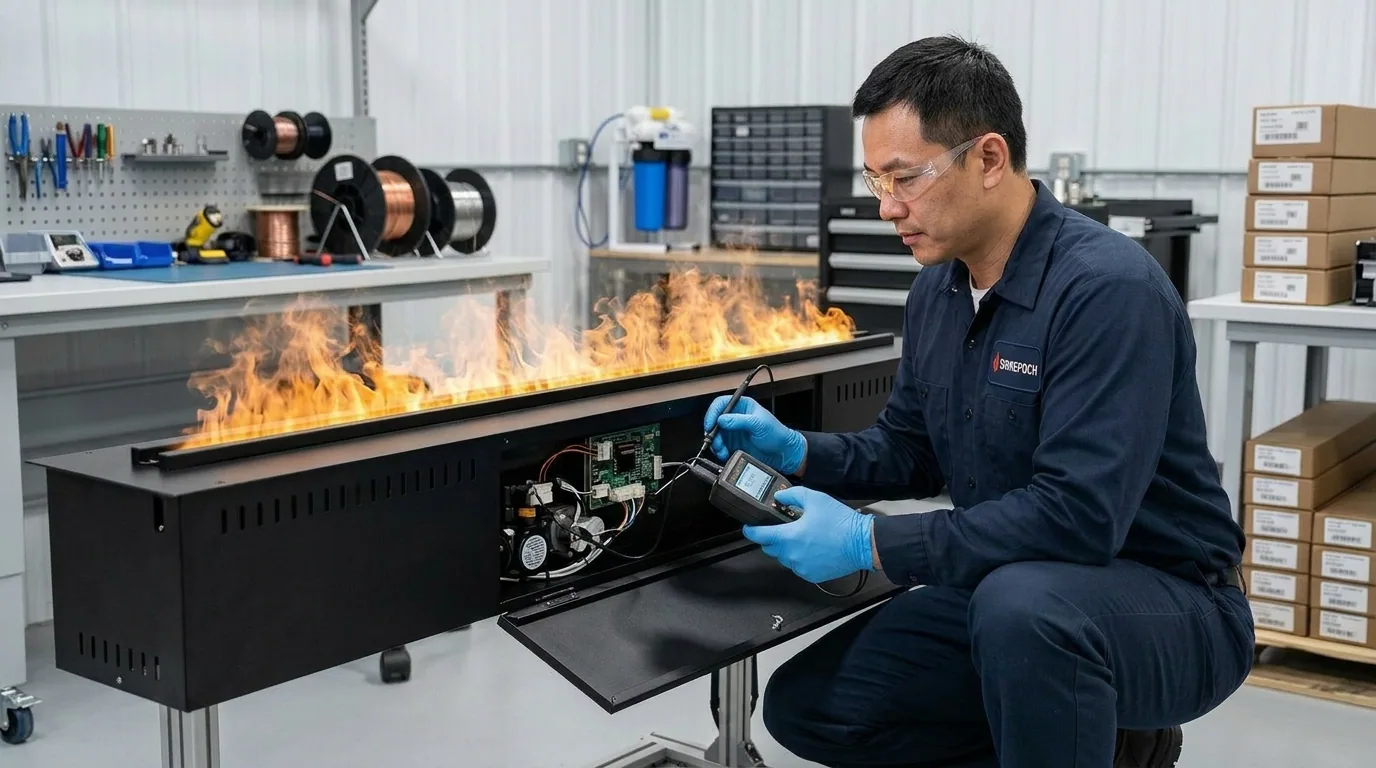
The practical goal is to reduce shipment risk before smart ethanol or water vapor fireplaces leave the factory. A buyer should be able to look at the specification and understand what the fireplace does, what it does not do, who maintains it, and what must be confirmed locally before installation.
Why this topic matters for real projects
Modern fireplaces are not only decorative objects. They affect wall construction, furniture layout, electrical planning, water or fuel handling, staff routines, and after-sales support. In a residential project, a small mistake may create inconvenience for the owner. In a hotel, restaurant, showroom, or distribution program, the same mistake can affect daily operation, warranty cost, and brand trust.
International projects add another layer of complexity. The manufacturer may be responsible for the product, the importer may be responsible for local support, the designer may be responsible for the visual concept, and the contractor may be responsible for site installation. When the product language is vague, each party may make different assumptions. That is why SEFIRE structures its product pages and buyer guides around application, installation, maintenance, and quality control rather than only model photos.
A strong fireplace specification should answer five questions: what visual effect is required, what technical system creates that effect, what the site must provide, who operates the product, and what maintenance is realistic. If those questions are answered early, the project is easier to quote, produce, install, and support.
Key specification factors
| Factor | Why it matters | Buyer action |
|---|---|---|
| Appearance inspection | Panel finish, welds, edges, glass, labels, and visible hardware should match order expectations. | Confirm this point before the purchase order, drawings, or site work are finalized. |
| Functional test | Ignition, flame, mist, LED color, remote, app, and buttons must be checked before packing. | Confirm this point before the purchase order, drawings, or site work are finalized. |
| Dimension check | Custom projects require written size confirmation and photos against drawings. | Confirm this point before the purchase order, drawings, or site work are finalized. |
| Safety logic | Sensors, overflow protection, anti-tilt logic, and shutdown behavior need verification where applicable. | Confirm this point before the purchase order, drawings, or site work are finalized. |
| Packing | Export packing should protect edges, glass, accessories, and surface finish. | Confirm this point before the purchase order, drawings, or site work are finalized. |
| Documentation | Manuals, labels, spare parts, and test records help downstream teams. | Confirm this point before the purchase order, drawings, or site work are finalized. |
Common risks to avoid
- checking only appearance and ignoring operation
- shipping custom units without dimension photos
- no packing photos before container loading
- missing spare parts for commercial projects
- unclear responsibility when accessories are absent
How to choose between water vapor, smart ethanol, and framed systems
A water vapor fireplace is usually the better choice when the buyer wants a safe decorative flame effect, a TV wall, a public-space feature, or a design with lower real-flame handling. It uses water mist and LED light to create a flame-like effect. It still needs electricity, water management, cleaning, and service access, but it avoids fuel storage and open combustion.
A smart ethanol fireplace is usually chosen when the buyer wants real flame, a stronger emotional atmosphere, and supplemental heat. It requires more attention to ventilation, fuel handling, clearances, user training, and safe operation. Smart controls can improve convenience, but they do not remove the need for responsible use and local installation review.
A custom firebox or fireplace frame becomes important when the visual result is architectural. Frames help define the opening, viewing side, installation depth, and finished structure. They are especially useful for builders and designers who need a cleaner interface between the fireplace product and the surrounding wall.
The best choice depends on the use case. A hotel lobby may benefit from a water vapor fireplace because many guests pass near the feature. A controlled lounge may justify smart ethanol because real flame is part of the experience. A renovation project may need a custom frame because the existing wall opening is unusual. A retailer may want several options so the sales team can match different customer budgets and expectations.
Application examples
First distributor order: Ask for test videos, packing photos, labels, and model confirmation before balance payment.
Hotel project: Check every custom size and keep a record of accessories and spare parts.
Retail sample: Inspect finish quality, remote operation, and customer-facing packaging because the sample will influence sales.
Water vapor order: Confirm mist output, LED color, water system function, and cleaning access.
Installation planning
Installation planning should begin with measurements. Confirm the finished opening, rough opening, wall depth, finish thickness, service direction, power route, and any water or drainage route. If the project uses real flame, add clearance planning, ventilation assumptions, and fuel storage procedures. If the project uses water vapor, add water quality, tank access, mist outlet position, and cleaning access.
Designers should avoid treating the fireplace as a flat image pasted into a wall. The product has depth, controls, accessories, and service needs. Builders should avoid closing the wall before the model, drawings, and access points are confirmed. Retailers should avoid selling only the visible flame effect without explaining what the buyer must prepare on site.
For commercial spaces, write down who starts the fireplace, who turns it off, who fills water or fuel, who cleans the unit, and who checks it before busy service periods. The handover document does not need to be complicated, but it should be clear enough for new staff to follow.
Safety, codes, and responsible use
Fireplace safety is local and product-specific. Water vapor fireplaces reduce many real-flame concerns, but they still include electrical parts, water systems, and maintenance requirements. Smart ethanol fireplaces create real flame, so clearances, room conditions, fuel handling, and user training deserve more attention. Manual ethanol burners are simple, but simplicity does not mean careless operation.
External authorities such as the U.S. EPA, Department of Energy, Consumer Product Safety Commission, International Code Council, and OSHA provide useful context on indoor air quality, heating products, fire safety, model codes, and chemical communication. These resources do not replace local approval. They help buyers ask better questions and understand why a fireplace should be treated as both a design element and a technical product.
SEFIRE can support product selection, dimensions, photos, videos, and supplier-side guidance. Final installation decisions should be reviewed by qualified local professionals who understand the building, jurisdiction, and intended use.
Quality control before shipment
For export buyers, quality control should happen before the goods leave the factory. A useful inspection checks appearance, structure, dimensions, function, controls, accessories, packaging, and documents. For water vapor fireplaces, buyers should confirm mist output, LED performance, water system function, noise level, and service access. For ethanol products, buyers should confirm ignition, flame behavior, control response, fuel tank construction, sensor logic, and surface finish.
Photos and videos are valuable because they create a shared record. A distributor can use them for sales training. A builder can use them to brief installers. A hotel engineering team can use them when checking accessories. A retailer can use them to compare the sample with later batch orders. Clear records are part of EEAT because they show that the supplier understands real product experience, not only marketing copy.
Buyer checklist
- Confirm the project type, room size, and expected operating hours.
- Decide whether the buyer needs real flame, decorative flame, heat, or a safer public-space visual effect.
- Confirm rough opening, finished opening, wall depth, finish material, and service access.
- Ask for product drawings, photos, test videos, packing information, and user instructions.
- Clarify who will operate, clean, refill, inspect, and maintain the fireplace after handover.
- Review local codes and site requirements with qualified professionals before installation.
Related SEFIRE resources
- how to choose a fireplace supplier
- SEFIRE about page
- 304 stainless steel ethanol burner guide
- water vapor fireplace standards
External references
- U.S. EPA indoor air quality source control guidance
- U.S. Consumer Product Safety Commission fire safety information
- U.S. Consumer Product Safety Commission heating safety information
- International Code Council overview of model building codes
- OSHA hazard communication overview for chemical handling programs
FAQ
Is this mainly a design decision or a technical decision?
It is both. The fireplace must fit the design, but the product also affects wall depth, access, safety, maintenance, and daily use. Good projects connect the visual idea with technical planning.
Can SEFIRE help choose the right product type?
Yes. Send the room type, opening size, desired flame length, quantity, destination country, and installation photos or drawings. SEFIRE can help compare smart ethanol, water vapor, manual burner, and custom frame options.
Do external references replace local code review?
No. External references are useful for education, but final installation should follow local rules and qualified professional review.
What should distributors ask before ordering?
Distributors should ask for model details, drawings, testing records, packing photos, spare parts, user manuals, and clear statements about customization limits and lead time.
What is the most common mistake?
The most common mistake is choosing a fireplace from a photo before confirming the room, operation plan, wall structure, service access, and local requirements.
Need help with a fireplace project?
Share your product series, project country, quantity, installation style, and target dimensions. SEFIRE can recommend practical models, specification details, and supply options.
Ask SEFIRE