Materials & Quality Control
304 stainless steel in ethanol burners: what buyers should verify
“Made from 304 stainless steel” is useful information, but it is not a complete quality claim. Importers and project buyers still need to verify which parts use that grade, whether the incoming material is traceable, how the sheet was formed and welded, and whether the finished fuel system passed the checks defined for the approved model.
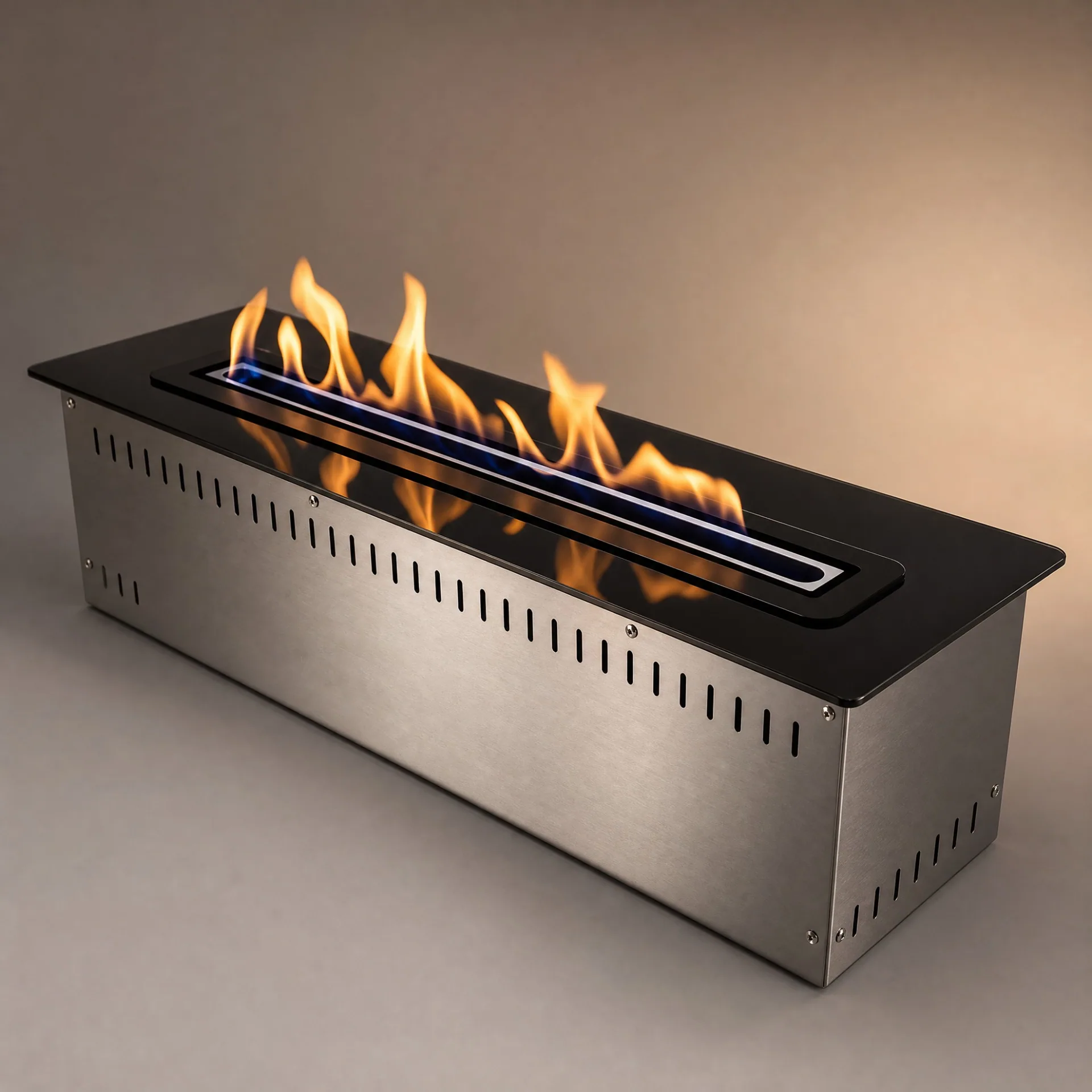
Evidence boundary: this article explains material procurement and inspection. It does not state that every SEFIRE product or every internal component uses Type 304. The binding material specification for an order is the approved quotation, bill of materials, drawing, sample, technical sheet, and delivered product documentation for that exact configuration.
Direct answer: 304 is a starting point, not a verdict
Type 304 is a widely used austenitic chromium-nickel stainless steel. Outokumpu identifies ASTM Type 304 as UNS S30400 and describes its Core 304/4301 product as approximately 18 percent chromium and 8 percent nickel, with good formability, weldability, and corrosion resistance for many general applications. ASTM A240/A240M is one of the principal material specifications covering chromium and chromium-nickel stainless steel plate, sheet, and strip for pressure vessels and general applications. These references establish what the material designation means; they do not certify a finished ethanol burner.
A finished burner is an assembly. The grade of one visible top plate cannot prove the grade of the tank, internal baffles, filler neck, fasteners, flame tray, tubing, or welded subassemblies. Nor can the word “304” prove adequate sheet thickness, a sound weld, a leak-free tank, correct thermal expansion allowances, suitable control logic, or safe fuel handling. Procurement should therefore treat material grade as one controlled characteristic inside a larger design-and-process specification.
The strongest buying position is not “the supplier says 304.” It is: the contract identifies the relevant components and grade; the supplier controls incoming material; records connect purchased sheet to production; the finished geometry and welds match the approved design; and functional, leakage, and safety checks are documented before shipment.
What the grade designation actually tells you
Stainless steel resists corrosion because chromium in the alloy supports a thin passive oxide layer on the surface. “Stainless” does not mean stain-proof, corrosion-proof, or immune to heat discoloration. Surface condition, contaminants, chloride exposure, crevices, welding heat tint, cleaning chemicals, and maintenance can all change real-world performance. A specification that names only the grade ignores these variables.
For procurement, distinguish four ideas that are often mixed together:
- Grade: the chemical composition and properties associated with a recognized designation such as ASTM Type 304 / UNS S30400.
- Product form: sheet, strip, plate, tube, bar, casting, or another form. A standard for flat-rolled sheet does not automatically cover every component form.
- Condition and finish: thickness, temper, surface finish, protective film, and any subsequent brushing, polishing, coating, or coloring.
- Fabrication quality: cutting, forming, welding, grinding, cleaning, passivation where specified, assembly, and handling after the raw material leaves the mill.
These distinctions matter when comparing quotations. Two products can both truthfully list “304 stainless steel” while using different thicknesses, different grades in concealed parts, different weld processes, and very different inspection controls. A material name is therefore not a substitute for an approved construction specification.
Map the material by component
A practical specification identifies the function of each part before assigning material. The following table is a procurement framework, not a universal SEFIRE bill of materials.
| Component group | Reason the material matters | Evidence to request |
|---|---|---|
| Visible top panel or flange | Appearance, flatness, cleanability, heat discoloration, and compatibility with the surrounding finish | Grade, thickness, finish sample, grain direction, flatness tolerance, and protective-film rule |
| Fuel tank or fuel-contact enclosure | Leak integrity, corrosion environment, forming, welded seams, and long-term cleanliness | Approved drawing, material callout, weld specification, leak-test method, and test record |
| Flame opening, tray, or baffle | Repeated heating, geometry stability, flame distribution, and cleaning access | Part drawing, thickness, forming details, approved sample, and functional test criteria |
| Internal brackets and partitions | Structural support, thermal movement, sharp-edge control, and serviceability | BOM callout, dimensional inspection, fastening or weld method, and corrosion protection if another alloy is used |
| Fasteners, tubing, fittings, and sensors | Galvanic compatibility, leakage risk, heat exposure, and replaceability | Component specifications, supplier part numbers, torque or connection requirements, and spare-parts list |
| Decorative black or colored panels | Coating adhesion can matter more visually than the base alloy alone | Base material, coating system, color sample, cure process, scratch criteria, and care instructions |
This map prevents a common procurement failure: approving a sample based on its top surface while leaving concealed fuel-containing and load-bearing parts undefined. It also makes change control possible. If a factory proposes a different grade or thickness because of availability, the buyer can evaluate a named component rather than debate an ambiguous catalog statement.
How to verify a 304 claim
1. Put the requirement in the controlled documents
The purchase order should refer to an approved drawing or BOM that states the grade for named parts. Use a recognized designation, such as ASTM Type 304 / UNS S30400 or an agreed equivalent, rather than the word “stainless.” Define thickness and finish separately. If substitution is allowed, state who must approve it and what evidence is required before production.
2. Review the material document chain
Depending on order size and risk, the evidence may include a mill test certificate, service-center certificate, coil or sheet label, supplier declaration, incoming inspection record, and production lot traceability. A certificate is valuable only when the factory can connect it to the material actually used. A disconnected PDF from a previous purchase is not traceability.
3. Use positive material identification selectively
Handheld X-ray fluorescence testing can identify major alloying elements and is commonly used for positive material identification. It should be performed by trained personnel with an appropriate test plan and equipment controls. XRF is useful for distinguishing many alloy families, but the method, calibration, surface condition, sampling location, and interpretation matter. It may not provide every element or resolve every grade question on its own. Use it as part of a documented verification plan, not as a theatrical photograph.
4. Do not rely on a magnet test
Austenitic 304 is generally described as nonmagnetic in its annealed condition, yet cold working, forming, and welding can create some magnetic response. Conversely, a weak magnetic response does not establish a full chemical composition. A magnet may reveal a surprising difference between parts, but it is not a grade certificate and should not be marketed as proof of 304.
5. Preserve lot identity during production
Traceability often fails after incoming inspection. Sheets are cut, protective labels disappear, offcuts are mixed, and work-in-progress parts move between stations. For high-risk or custom orders, the factory should define how job number, material lot, traveler, pallet, or batch markings stay connected until final assembly. The system need not be complicated, but it must be credible when audited.
Fabrication can matter as much as alloy selection
A correct grade can still become a poor component. Thin sheet may distort during welding. Inconsistent fixturing can twist the top panel. Excessive grinding can change visible geometry. Carbon-steel contamination from shared tools can create rust staining. Unremoved heat tint can reduce local corrosion resistance. Sharp edges can damage wiring, hoses, hands, or packaging. These are process-control issues, not failures of the 304 designation.
For welded fuel-related parts, inspect both appearance and function. A smooth cosmetic weld is not automatically leak-tight, and a leak-tight weld may still have unacceptable undercut, porosity, spatter, distortion, or inaccessible crevices. The drawing should identify critical seams, while the quality plan defines the inspection and leak-test method. Where a pressure, vacuum, liquid hold, or other leak test is used, the procedure needs an acceptance criterion, test duration, equipment control, and record linked to the unit or lot.
Surface finish also needs control. A brushed visible panel should have consistent grain direction, no cross scratches, no embedded abrasive debris, and no exposed sharp corners. Protective film should remain only where it will not be trapped near heat or become impossible to remove after assembly. Cleaning agents used at the factory and on site should be compatible with stainless steel and the surrounding coatings, seals, electronics, and decorative finishes.
304, 304L, 316, and 430: avoid simplistic rankings
| Material family | Useful procurement distinction | Question to resolve |
|---|---|---|
| 304 / S30400 | General-purpose austenitic chromium-nickel stainless with broad availability and good fabrication characteristics | Is the exposure indoor and moderate, and are the fabrication and cleaning controls suitable? |
| 304L / S30403 | Lower-carbon version used where improved resistance to sensitization after welding is relevant | Is the component heavily welded, and what exact grade and product standard are specified? |
| 316 / 316L family | Molybdenum-bearing austenitic grades generally selected for improved resistance in more aggressive chloride environments | Does coastal spray, pool chemistry, deicing salt, or another chloride source justify the change? |
| 430 family | Ferritic chromium stainless without the same nickel content or corrosion profile as 304 | Is it being used for a suitable non-fuel-contact or decorative function, and is substitution explicitly approved? |
“316 is always better” is not a sound buying rule. A higher-alloy material can be wasted if the design traps liquid, the weld is poor, the surface is contaminated, or maintenance uses chloride-rich cleaners. Conversely, 304 should not be assumed suitable for every coastal, poolside, or chemically cleaned installation. The environment, component function, fabrication route, finish, and life-cycle maintenance should drive selection.
Heat, corrosion, and the real operating environment
Buyers sometimes equate stainless steel with unlimited heat resistance. That is incorrect. Ethanol flame creates localized thermal exposure, and the temperatures of individual parts depend on geometry, flame setting, run time, fuel, airflow, heat shielding, and installation. Material selection must be evaluated within the finished design. Visible discoloration may be a surface-temperature and oxidation issue; permanent distortion may indicate insufficient stiffness, thermal restraint, or unsuitable geometry; damage to nearby parts may indicate a broader design or installation problem.
Corrosion risk should be described in site terms. Ask whether the unit will be indoors, outdoors under cover, directly exposed to rain, near a coast, near a swimming pool, cleaned by hotel staff with unknown chemicals, or stored in humid packaging. Also ask whether water can sit in seams and whether unlike metals touch while wet. “Outdoor” is not one exposure category. A dry covered terrace and an unsheltered marine installation are materially different.
For any real-flame product, material quality does not remove the fuel hazard. The U.S. Consumer Product Safety Commission has warned about flame jetting and pool-fire hazards associated with certain open-container alcohol-burning devices and refilling when a flame may still be present. A built-in automatic burner is not automatically the same product category, but the physical lesson remains important: fuel containment, controlled filling, flame detection, shutdown logic, instructions, and user behavior must be evaluated separately from the stainless grade.
A receiving and pre-shipment inspection plan
For a first order, custom project, or private-label program, establish checkpoints before mass production. A practical sequence is:
- Document approval: freeze model, dimensions, materials by component, thicknesses, finishes, options, labels, accessories, and packaging.
- Golden sample: retain an approved sample or signed inspection photos with measured reference points.
- Incoming material: verify supplier, grade records, thickness, finish, and lot identification against the approved BOM.
- First-piece fabrication: check forming, weld location, distortion, critical dimensions, access panels, and component fit before releasing the batch.
- In-process controls: record critical weld or tank checks at the station where a defect can still be corrected.
- Functional test: test the completed unit using the approved procedure for controls, sensors, alarms, ignition, flame adjustment, shutdown, and any applicable leakage or overflow protection.
- Final cosmetic inspection: inspect under defined lighting for grain direction, scratches, dents, fingerprints, coating marks, fastener fit, labels, and protective film.
- Packing audit: confirm dry and clean surfaces, accessory count, manuals, spare parts, protective materials, carton or crate identification, and shipment orientation.
Sampling should reflect risk. A visible scratch may justify statistical sampling, while a critical fuel-containment or safety function may require a different control level or 100 percent testing. The buyer and manufacturer should agree this before the order, not after a defect is discovered.
Questions that expose weak supplier claims
- Which exact parts are Type 304, and where is that shown on the approved BOM?
- What product standard and grade designation appear on the material certificate?
- How do receiving records remain connected to cut parts during production?
- What are the nominal and allowed thicknesses for the tank, top, and structural parts?
- Which seams are critical, and how is leak integrity verified?
- How are shared cutting, grinding, and brushing tools controlled to reduce cross-contamination?
- What finish acceptance standard is used for visible surfaces?
- What changes require written buyer approval?
- Which tests are performed on every unit, and which are sampled by lot?
- Can the test record be linked to the serial number, job number, or production batch?
A capable supplier should answer with documents, process descriptions, and records. A weak supplier will repeat “high-quality 304” without defining the component, thickness, evidence, or acceptance criteria.
How to write a usable purchase specification
A specification does not need to be long, but it must be unambiguous. State the ordered model and revision; identify each material-controlled component; specify grade, product form, thickness, and finish; define whether equivalents are prohibited or subject to approval; reference the approved drawing and sample; list critical tests; and define the records required before shipment. Add destination environment, expected installation, and any coastal, poolside, hospitality-cleaning, or outdoor exposure that could affect the recommendation.
For private-label buyers, include change notification. A factory should not silently alter a grade, gauge, coating, sensor, pump, valve, control board, fuel hose, or safety component because a subcontractor changed. Some substitutions may be acceptable, but the decision belongs inside a controlled review, especially when labels, declarations, instructions, or prior test evidence depend on the original configuration.
Related SEFIRE planning resources
- Fireplace quality inspection guide for importers
- Manual vs smart ethanol burners
- Ethanol fireplace clearance planning
- RCFB Regular smart ethanol fireplace series
- SEFIRE technical data and corrections policy
Primary references used
- ASTM A240/A240M: chromium and chromium-nickel stainless steel plate, sheet, and strip
- Outokumpu Core range datasheet: 304/4301 and related stainless grades
- U.S. CPSC consumer alert on alcohol-burning fire pits and flame jetting
- ASTM F3363: unvented liquid/gel fuel-burning portable devices
Source interpretation: ASTM and Outokumpu are cited for material definitions and properties. CPSC and ASTM F3363 address specific liquid-fuel product hazards and scopes; they do not certify a SEFIRE model. Product compliance and installation decisions must use the evidence applicable to the exact product, market, and site.
FAQ
Is 304 stainless steel automatically safe for an ethanol burner?
No. Type 304 can be a suitable fabrication material, but safety depends on the complete burner: fuel containment, geometry, thickness, weld integrity, thermal design, controls and sensors where fitted, operating instructions, installation, and user behavior. A material grade cannot certify the assembly.
How can I verify that the steel is really 304?
Start with a controlled BOM and traceable material documentation. For higher-risk orders, add risk-based PMI testing on representative parts and preserve the connection between material lots and production. Do not rely on color, catalog photographs, price, or a magnet alone.
Does 304 rust?
It can stain or corrode under unfavorable conditions. Chlorides, contaminated tools, welding heat tint, crevices, standing moisture, aggressive cleaners, and marine or poolside environments can undermine performance. The material, finish, fabrication, design, exposure, and maintenance all matter.
Is 316 always the premium choice?
No. Type 316 is often considered for improved chloride resistance, but it does not correct weak design, poor welding, contamination, or inappropriate cleaning. Specify it where the exposure and component function justify it, then control fabrication with the same discipline.
What evidence should I ask for before shipment?
Request the approved BOM and drawing revision, material records appropriate to the order, critical dimensional results, leak or fuel-system test records, functional test evidence, cosmetic inspection, labels and manuals, accessory count, and packing photographs. The required evidence should be agreed before production.
Editorial method and corrections
This guide was substantially rewritten after a content-quality audit identified excessive template reuse in the earlier version. The revised page separates verified material facts from SEFIRE procurement practice and from project-specific recommendations. It was checked against the primary references listed above and the SEFIRE technical-data policy. If a cited standard is revised, or if an ordered model uses a different approved construction, the current standard and order documents take precedence.
For a correction, source request, or model-specific material declaration, contact sales@sefireplace.com and identify the page, product model, quotation number if applicable, and the statement that requires review.
Need a material and inspection plan for an ethanol burner order?
Send the model, quantity, destination, exposure environment, finish, private-label requirements, and the evidence your quality team needs. SEFIRE can align the quotation, drawing, sample approval, and pre-shipment checklist before production.
Request Project Documents